Lymphoedema, Vascular Insufficiency & Vascular Ulcers
Managing swelling is an important part of protecting your skin, supporting wound healing and maintaining mobility.
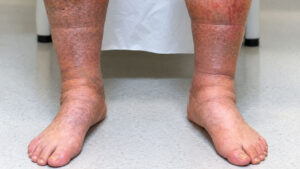
Chronic swelling of the legs can occur for many reasons. In patients with venous or vascular insufficiency, fluid can accumulate in the tissues and, over time, contribute to the development of secondary lymphoedema.
When swelling becomes persistent, the skin and underlying tissues can become increasingly vulnerable. This may contribute to skin changes, discomfort, reduced mobility and, in some patients, the development or delayed healing of vascular ulcers.
At The Lymph Clinic, we provide specialised lymphoedema therapy to help manage chronic swelling and support the overall health of the affected limb.
Vascular Insufficiency and Swelling
The veins in the legs are responsible for returning blood towards the heart. When the venous system is not functioning effectively, blood and fluid can accumulate in the lower limbs.
This may result in:
- Swelling of the ankles, feet and legs
- A feeling of heaviness or tightness
- Aching or discomfort
- Skin discolouration and changes in skin texture
- Reduced ankle and leg movement
- Increased vulnerability to skin breakdown
- Recurrent or slow-healing ulcers
When swelling persists for a prolonged period, the lymphatic system may also become overwhelmed. This can result in lymphatic insufficiency and secondary lymphoedema, creating a cycle in which swelling becomes increasingly difficult to control.
Vascular Ulcers and Chronic Swelling
Vascular ulcers, particularly those associated with chronic venous insufficiency, require appropriate medical and wound management.
Swelling is an important factor to consider because excessive fluid in the tissues can increase pressure within the limb and may negatively affect the surrounding skin and tissue environment.
Controlling oedema is therefore an important part of comprehensive limb management.
Lymphoedema therapy does not replace vascular or wound-care treatment. Instead, it can form part of a coordinated treatment approach alongside the management provided by your doctor, vascular specialist or wound-care professional.
Why Managing Swelling Matters
Reducing and controlling swelling can help to:
- Improve comfort and reduce the feeling of heaviness
- Support mobility and functional movement
- Maintain the flexibility of the ankle and leg
- Reduce tension on the skin
- Protect the tissues from further swelling-related changes
- Support good skin care and tissue health
- Assist with the overall management of a limb affected by chronic oedema
- Reduce the risk of swelling becoming progressively more difficult to control
For patients with chronic vascular problems, swelling management is often not simply about appearance — it is about maintaining the health and function of the limb.
Our Approach to Treatment
Treatment is individually assessed according to the patient's vascular status, skin condition, wound status and degree of swelling.
Your treatment may include:
Manual Lymphatic Drainage (MLD)
Gentle, specialised techniques are used to stimulate lymphatic flow and assist with the movement of excess fluid from the affected tissues.
Compression Therapy
Compression can play an important role in controlling chronic oedema. The type and level of compression must be carefully selected, particularly in patients with vascular disease.
Compression should only be used after appropriate vascular assessment where arterial disease is suspected or present.
Skin & Tissue Care
Chronic oedema can make the skin more vulnerable. Education regarding moisturising, skin inspection, hygiene and early recognition of changes is an important part of treatment.
Exercise & Movement
Appropriate movement and exercise can assist the natural pumping mechanisms of the muscles and support circulation and lymphatic drainage.
Exercises are selected according to the individual's mobility, vascular condition, wound status and overall health.
Self-Management Education
We teach patients practical strategies to help manage their swelling between treatments, including movement, elevation, skin care, compression management and recognising changes that require medical attention.
A Team Approach to Vascular Ulcers
Vascular ulcers require appropriate diagnosis and medical management.
Depending on the cause of the ulcer, your treatment team may include a:
- Vascular specialist
- General practitioner or specialist physician
- Wound-care nurse
- Physiotherapist / lymphoedema therapist
- Other healthcare professionals where required
At The Lymph Clinic, we work alongside your existing medical team where appropriate. Our role is to help manage the associated swelling and maintain the function and condition of the limb.
Important
Not every swollen leg should be treated with the same compression or lymphatic techniques.
Where there is suspected or known arterial insufficiency, significant vascular disease, acute infection, an unexplained ulcer or other medical concerns, appropriate medical assessment is essential before compression or lymphoedema treatment is commenced.
Don’t Ignore Persistent Leg Swelling
If your legs regularly become swollen, heavy or tight, particularly if you have a history of varicose veins, venous insufficiency, vascular disease or leg ulcers, it is worth having the swelling properly assessed.
Early and appropriate management can help prevent chronic swelling from becoming increasingly difficult to control and can form an important part of maintaining long-term limb health.
Specialist Lymphoedema Therapy
At The Lymph Clinic, we specialise in the assessment and management of lymphoedema and chronic oedema, including swelling associated with vascular conditions.
Our aim is to help you understand your swelling, manage it effectively and maintain the best possible function and quality of life for your affected limb.
SPECIALIST LIPEDEMA & LYMPHOEDEMA THERAPY
Qualified Lipedema & Lymphoedema Therapist
Specialised physiotherapy and lymphatic therapy for:
Lipedema | Lymphoedema | Lipo-Lymphoedema | Swelling | Mobility | Pain Management | Exercise & Movement
Take the first step
If you have been diagnosed with lipedema, suspect that you may have lipedema, or are experiencing unexplained swelling, heaviness or discomfort in your limbs, an individual assessment can help determine the most appropriate approach for you.
Contact The Lymph Clinic to arrange an assessment.
0119070144
YOU ARE NOT ALONE
Living with lipedema can be physically and emotionally challenging, particularly when your symptoms have previously been misunderstood or dismissed.
You deserve to have your concerns taken seriously and to receive treatment that recognises the complexity of the condition.
You do not have to wait until your symptoms become severe before seeking help.
Early assessment and appropriate management can help you understand your condition and establish strategies for living well with lipedema.