
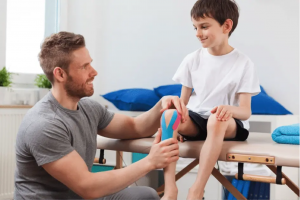
The Importance of Physical Therapy for Kids
There are considerable advantages when undergoing paediatric physical therapy that may not only benefit a child physically, but mentally too. Physical therapy helps children learn to successfully and independently perform gross motor skills and functional mobility skills. As a child begins to successfully develop these skills, it creates a greater form of independence that helps contribute to achieving a higher sense of self-esteem. Though physical therapy for children provides a safer form of development and strengthening, it is also capable of being an essential preventative measure by addressing any muscle imbalance or weakness.
Benefits of Paediatric Physical Therapy
You are probably asking yourself, what are the main benefits that come with pediatric physical therapy? We have listed below the essentials involved in our services, the benefits that come with it and the experience your child will get.
Physical therapy rehabilitation is extremely important after an injury. Oftentimes, it’s crucial for individuals who have undergone a surgery or suffered an injury to receive rehabilitative physical therapy services to regain the level of activity they had in the past.
Alternatively, physical therapy habilitation is imperative in helping kids with disabilities attain, keep, or improve skills and functioning for daily living.
What Can Physical Therapy Help My Child Improve On?
NAPA paediatric physical therapists will work closely with you to identify your child’s goals. Common physical therapy goals for children include:
- Range of Motion – how far a joint can bend or straighten
- Strength – strength against gravity
- Balance – ability to maintain balance (tilting and righting responses) and to keep oneself from falling (protective responses)
- Reflexes – automatic responses seen particularly in infants (palmar grasp, positive support, asymmetrical tonic neck reflex [ATNR] and labyrinthine)
- Posture – alignment of the body in various positions
- Tone – natural resistance in a muscle (increased tone is stiffness and decreased tone is floppiness)
What’s Included in NAPA Paediatric Physical Therapy Services?
A variety of treatment interventions may be used including: developmental activities, therapeutic exercise, balance and coordination activities, adaptive play activities, mobility training, safety and prevention programs, and activities to promote overall wellness.
- Customised plan based on your child’s unique needs and goals (NAPA offers paediatric PT in both traditional and intensive settings)
- Stretching and strengthening activities and exercises to increase a child’s range and quality of movement
- Establishing or reshaping movement patterns to follow normal development
- Improving balance and equilibrium skills
- Improving postural control
- Gait training
- Evaluating the need for adaptive equipment and orthopaedic devices
How Do I Know If My Child Needs Physical Therapy?
Your child may benefit from physical therapy if:
- They are not meeting the expected developmental milestones during the first year of life (ie. rolling, sitting, standing, walking).
- They have a strong preference for turning their head to one side or using one side of their body.
- They walk up on the balls of their feet or walk in an atypical/awkward manner.
- They have difficulty keeping up with their peers during play.
- They are not able to perform the same gross motor tasks (ie. hopping, jumping, skipping) as their peers.
- They frequently trip and fall when walking.
- They complain of pain when performing gross motor tasks.
- They were injured and are not able to perform at their prior level of function.
Additionally, physical therapy can benefit your child if he/she is experiencing or has experienced:
-
- Prematurity
- Torticollis/Wry Neck (head tilt)
- Muscular Dystrophy
- Down Syndrome
- Spina Bifida
- Cerebral Palsy
- Stroke
- Delays in developmental milestones
- Hypotonia (weakness, low tone)
- Hypertonia (tightness, high tone)
- Gross motor in-coordination
- Motor planning difficulties
- Gait difficulties
- Orthotic concerns
- Neurological problems
What is Paediatric Physical Therapy?
Paediatric physical therapy is essentially various workouts and exercises that focus on certain muscles and movements, which are aimed at strengthening muscles and tendons.
Physical therapy is very similar to going to the gym and working with a personal trainer, although the physical therapists that your child will work with are specifically trained and experienced in paediatric diagnoses and injuries.
It is extremely important for children to follow their physical therapy routine as closely as they can, due to the fact that they are growing while they are likely going through the process of recovery. The fact that they are growing means that it is even more important to address any concerns within a timely manner.
Our Paediatric Physical Therapist-Approved Activities to Try at Home:
- 15 Activities to Build Gross Motor Skills for Summer
- 5 Easy Proprioception Exercises by a Physical Therapist
- 5 Ways to Use Your Swing Set for Physical Therapy
- Dynamic Standing Balance Activities
- Hand-Eye Coordination Activities for Kids
Credits and Further Reading
www.rsicares.com
www.NAPA Center.org
www.wikipedia.org
www.mayoclinic.org
cypf.berkshirehealthcare.nhs.uk
Other Physiotherapy Services
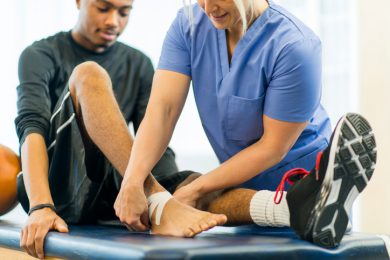
Sports Injuries
The benefits of sports and exercise far outweigh the risks, but occasionally injuries do happen.
Read More
Aquatic Therapy
Aquatic therapy refers to water-based treatments or exercises of therapeutic intent, in particular for relaxation, fitness,...
Read More